
Static content is losing its effectiveness. In a world where the average person scrolls through 300 feet of mobile content daily, static images and plain text struggle to capture attention.
Animation has become the solution brands need to stand out, explain complex concepts, and create memorable experiences. But we’re not talking about the bouncing logos of the early 2000s. Today’s animation trends are sophisticated, purposeful, and proven to drive engagement.
Why Animation Works in Digital Marketing
Your brain processes visual information 60,000 times faster than text. Add movement to those visuals, and you create something that naturally draws the eye.
Animation addresses three key marketing challenges:
- Grabbing attention in crowded social feeds
- Explaining complex products or services quickly
- Creating emotional connections with your audience
This is particularly valuable for B2B companies that need to make technical concepts accessible and engaging.
Micro-Animations: Small Movements, Big Impact
Micro-animations are those subtle, functional animations that guide users through digital experiences. Think of buttons that expand on hover or progress bars that show loading status.
Key applications include:
- Visual feedback for user actions
- Guiding attention to important elements
- Making interfaces feel more responsive
- Reducing perceived wait times
The key to effective micro-animations? Restraint. They should enhance the user experience without becoming distracting. When done well, users barely notice them consciously, but the interaction feels more natural and satisfying.
3D Animation: Adding Depth to Digital Experiences
Three-dimensional animation has become more accessible and affordable, leading to widespread adoption across digital platforms.
Common uses include:
- Product demonstrations: 360-degree views and exploded diagrams
- E-commerce: Products shown in realistic environments
- Software demos: Making abstract concepts tangible
- Technical explanations: Complex processes visualized clearly
With WebGL and improved browser capabilities, 3D animations now run smoothly on websites without requiring special plugins or downloads, making them practical for businesses of all sizes.
Morphing and Shape Animation
Morphing animations, where one shape smoothly transforms into another, are perfect for visual storytelling and showing transformation.
Effective applications:
- Financial services showing investment growth
- Tech companies demonstrating data transformation
- Service businesses illustrating their process
- Product evolution or improvement over time
The power of morphing lies in creating visual metaphors. Instead of explaining that your software transforms data into insights, you can show it happening.
Kinetic Typography: Making Words Move
Typography animation has evolved beyond simple text slides. Modern kinetic typography includes letters that build themselves, words that react to interaction, and text synchronized with audio.
Where it excels:
- Social media content that needs to communicate quickly
- Website headers that demand attention
- Email campaigns that boost engagement
- Video content that reinforces key messages
Movement helps draw attention to important points and conveys tone and personality in ways static text cannot achieve.
Liquid Motion and Fluid Animations
Liquid motion graphics simulate flowing movement, creating organic animations that feel natural and sophisticated.
These animations work particularly well for:
- Wellness and lifestyle brands
- Financial services wanting to appear approachable
- Technology companies emphasizing user-friendliness
- Background elements that add visual interest
The fluid movement can represent growth, transformation, or seamless processes while maintaining professionalism.
Interactive Animation: Engaging Through Participation
Interactive animations respond to user actions, creating personalized experiences that encourage deeper engagement.
Successful implementations:
- Hover effects revealing product details
- Scroll-triggered animations that tell a story
- Interactive timelines and process flows
- Data visualizations users can explore
The goal is making interactions feel intuitive and purposeful, adding value to the user experience.
Data Visualization Animation
Animated data visualizations tell stories through movement, making complex information more digestible and memorable.
Benefits include:
- Showing changes over time clearly
- Revealing insights progressively
- Maintaining viewer attention
- Simplifying complex relationships
This trend is particularly effective for B2B marketing, where companies need to communicate complex information clearly and persuasively.
Character Animation: Building Brand Personality
Modern character animation goes beyond simple mascots, creating sophisticated brand ambassadors that convey emotions and ideas effectively.
Strategic uses:
- Explaining services or processes
- Adding personality without overwhelming
- Creating memorable brand touchpoints
- Humanizing technical or corporate brands
Characters don’t need to be cartoon-like; they can be minimalist, abstract, or realistic depending on brand aesthetic.
Implementing Animation in Your Strategy
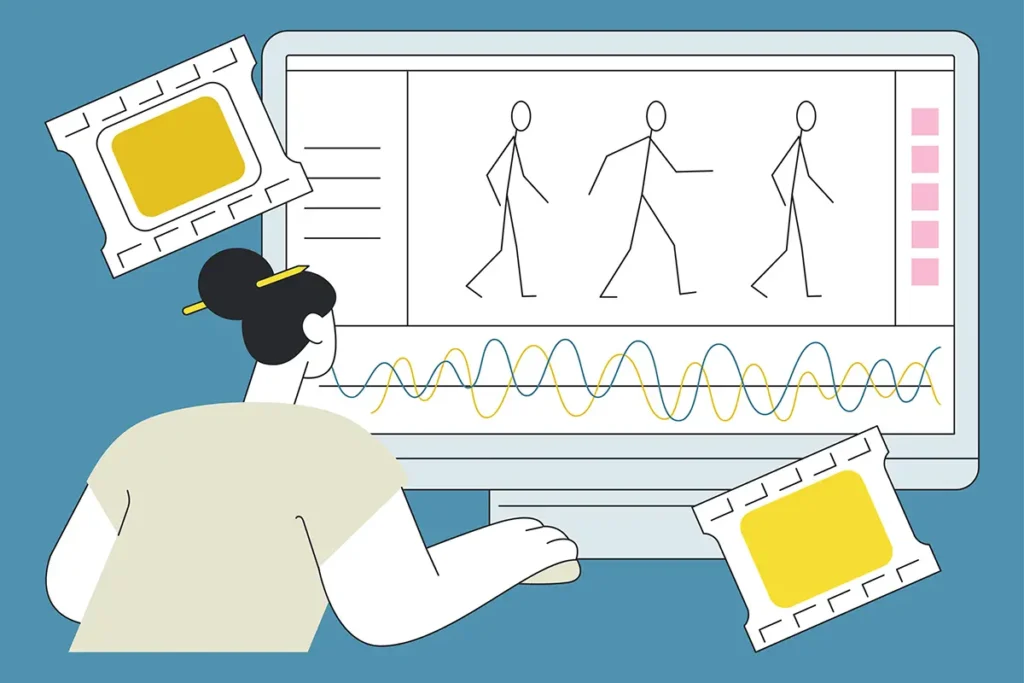
Successful animation implementation starts with understanding your audience and choosing the right type for your goals.
Key considerations:
- Identify specific problems animation can solve
- Match animation style to brand personality
- Consider budget and timeline for creation and updates
- Test across platforms and devices
Start by identifying where animation could solve specific problems in your current marketing. Are users confused about your product? Consider explanatory animation. Is engagement low on social media? Try kinetic typography or micro-animations.
Technical Considerations
While modern tools have made animation more accessible, technical factors still matter:
- File size and loading times affect user experience
- Device compatibility ensures broad reach
- Platform requirements vary between web and social
- Fallback options for older browsers or slow connections
For web animations:
- Use CSS animations for simple effects
- Implement JavaScript libraries for complex interactions
- Optimize video formats for different platforms
- Always test across devices and connection speeds
The Future of Animation in Marketing
Emerging trends to watch:
- AI-powered animation generation at scale
- Personalized animations based on user behavior
- Augmented Reality (AR) and Virtual Reality (VR) creating immersive experiences
- Real-time animations responding to data
The brands that will succeed are those using animation strategically, focusing on how it serves their marketing goals rather than following trends blindly.
Moving Forward with Animation
Animation has evolved from a nice-to-have to a necessary tool for brands wanting to stand out in crowded digital spaces. The key is choosing the right type of animation for your specific audience, goals, and budget.
At Absolute Studios, we help businesses harness the power of animation to create compelling digital marketing campaigns that drive measurable results. From micro-animations that enhance user experience to complex 3D visualizations that explain your products, we understand how to make animation work for your business goals.
Contact us today to explore how strategic animation can transform your digital marketing approach.